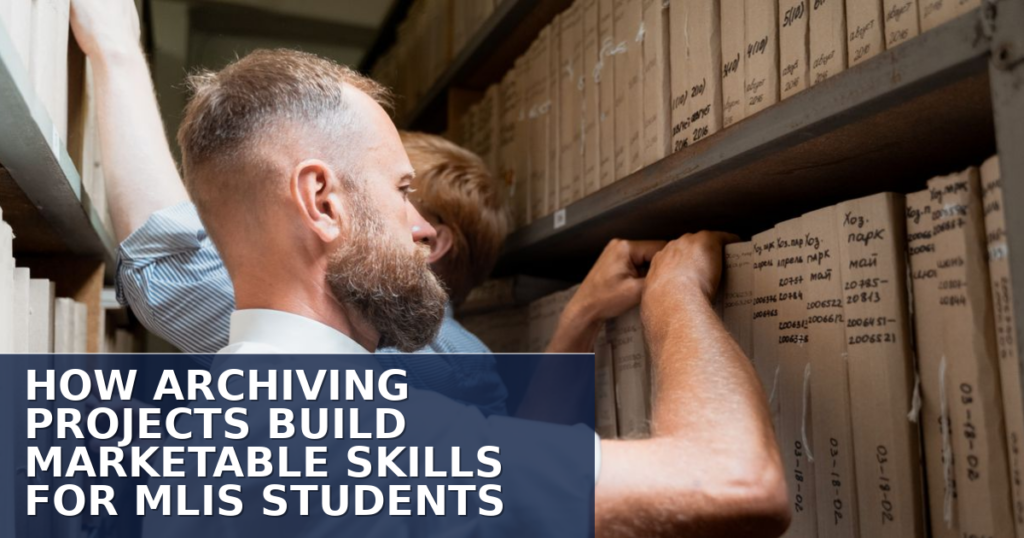
The archive holds 100,000 source file cards and 30,000 biographical records.
Project workflow includes fumigation, database development, digitization, and systematic cataloging.
Polish funding combines ministry grants, EU structural funds, and university contributions.
How do you digitize 100,000 fragile source file cards and roughly 30,000 biographical records when many exist only as manuscripts and typescripts? The University of Lodz's Dictionary of the Polish Book project tackles that exact preservation triage: a card archive spanning 1946-1972 with no printed surrogates.
For LIS professionals, it is a practical case study in stabilizing materials before imaging, building record structures, and designing public access. The scale alone makes the workflow instructive: without systematic digitization, unique biographical and bibliographic data remain invisible to researchers and vulnerable to physical loss.
What Is the Dictionary of Polish Book Digitization Project?
For LIS professionals, the central tension here is familiar: how do you preserve a fragile, irreplaceable archival collection while also making it visible and usable to scholars worldwide? The University of Lodz is responding with a digitization project that fits within broader digital transformation in libraries, though it is still in its early planning phase.
A Joint Library and Faculty Effort
The initiative is formally titled "Digitisation and Public Access to the Archive of the Dictionary of the Polish Book 1946-1972." It is carried out by the University of Lodz Library in cooperation with the Faculty of Philology, specifically the Department of Information, Library and Book Science. This partnership brings together library operations and LIS research expertise, a structure that mirrors best practice in academic digitization programs.
What the Archive Contains
The source material includes over 100,000 file cards and approximately 30,000 biographical records. Together, these documents cover people involved in book creation from the Middle Ages to the twentieth century. Many records survive only as manuscripts or typescripts, making the collection both a rich biographical resource and a test of digital preservation skills.
Portal Timeline and Access
As of August 2026, the project remains in the launch phase. The University of Lodz announcement on August 20, 2026 marked the start. No live public portal or search database has been published yet, and the university has not released completion milestones or a phased timetable. The intended outcome is a modern online portal for searching and exploring the digitized records. Project materials are planned to be published online, largely under a Creative Commons Attribution (CC BY) license, with funding support from the Ministry of Science and Higher Education through the "Science, Society and Heritage" program.
Why the 1946-1972 Archive Is a Cultural Heritage Priority
Over 100,000 source file cards and roughly 30,000 biographical records make the University of Lodz archive a concentrated record of Polish book culture. Many of these documents exist solely as manuscripts and typescripts, with no printed surrogate or earlier digital copy. That single-copy status places the collection at acute risk: one fire, flood, or paper degradation event could permanently erase biographical details that have not been duplicated anywhere else.
A Window Across Centuries
The files cover individuals involved in book creation from the Middle Ages to the twentieth century. This chronological span links medieval scribes and early printers to modern editors, publishers, and bibliographers, allowing researchers to trace how Polish book production, authorship, and publishing roles changed over time.
National and European Heritage
The archive also matters because it documents book culture as part of national and European heritage. By making these materials publicly accessible, the project helps recover the human networks behind Poland's printed heritage, from anonymous craftspeople to named intellectual figures. For LIS professionals, the collection demonstrates why fragile biographical records deserve the same preservation priority as the books themselves. The University of Lodz project turns what could have remained a closed paper archive into a reusable research source for literary history, bibliography, and cultural heritage studies.
Inside the Digitization Workflow: Fumigation, Imaging, and Cataloging
Digitizing a fragile card archive is a digital preservation decision as much as a technology workflow, and the Polish project shows why material preparation and record design matter before imaging begins.
Selection and Stabilization
Polish academic libraries generally prioritize uniqueness, physical fragility, research value, and public demand, with special weight on 19th- and 20th-century editions and at-risk formats.1 The Dictionary of the Polish Book archive qualifies on all fronts: over 100,000 source file cards and roughly 30,000 biographical records from 1946-1972 include many manuscripts and typescripts that were not widely accessible. Before any scanning, fumigation in an ethylene oxide KONVAK chamber stabilizes the collection. Materials above 60% relative humidity are rejected, and paintings, plastics, photos, parchment, and foil-sealed items are excluded; the size limit is A4.
Imaging and Output Formats
Minerva Poland's guidelines recommend TIFF master files with at least 2700 pixels on the long side and 8-24 bit color depth for photos and graphics.1 The dictionary workflow scans at 600 dpi to TIFF and then creates JPEG, PDF, and DjVu access copies.3 Published guidelines do not name a single scanner model. For Polish-language typescripts and handwritten cards, OCR is selective rather than authoritative. Handwriting and mid-century typescripts resist automated recognition, so OCR output is best treated as a search aid, and institutions set their own quality-control checks rather than following one national sampling standard.
Metadata for 100,000 Cards
Record structure has to connect source file cards to biographical entries, dates, roles, and search terms. Polish digital libraries rely on Dublin Core (PN-ISO 15836:2006), and the Digital Libraries Federation maps its descriptive schema to the Europeana Data Model for aggregation via OAI-PMH. That structured approach is what allows the planned public portal to search names, titles, and dates across a collection this size without flattening the relationships between cards and people.
Funding, Costs, and Cross-Department Collaboration
Polish library digitization now runs on a mixed public financing model: state-budget ministry grants, EU structural funds, and in-kind university contributions often combine in the same portfolio, so project budgets rarely sit in one clean line.
Funding Model
The University of Lodz dictionary archive project is financed from Polish state budget funds through the Ministry of Science and Higher Education under the Social Responsibility of Science III programme, agreement SBN/SP/0081/2026/01, not through an EU grant. University of Lodz Library funding notices also tie the project title to a 300,000 PLN total and a 237,600 PLN ministry share, but the published records do not confirm whether that totals the full initiative. Treat that range as a rough floor rather than a fixed budget.
Division of Labor
The University of Lodz Library leads preservation and digitization operations: fumigation, imaging, cataloguing, and database production. The Department of Information, Library and Book Science in the Faculty of Philology contributes scholarly and technical design for record structures, search access, and metadata, as an in-kind academic collaboration with no stated monetary value. That split matters because it keeps conservation work and information-science design in the same workflow, reducing the risk of scanning fragile cards without searchable, standards-based access.
Comparable Polish Budgets
Other 2026 University of Lodz digital-library projects range from 300,000 PLN for Pomeranica and Prussica materials to 666,884.87 PLN for a scientific outreach initiative. The National Library's EU co-financed patrimonium programme is far larger at about 98.98 million PLN. No published cost-per-page figure can be drawn from these totals; for US readers, how much does an MLIS degree cost is a separate comparison.
Polish Digital Library Landscape: Polona, Academica, and Regional Portals
Poland's digital library ecosystem combines national platforms, interlibrary lending services, university repositories, and regional dLibra portals. The comparison below outlines their operators, access limitations, content scope, and intended uses. For the Dictionary of Polish Book project, the University of Lodz portal will offer a dedicated access point within this broader landscape.
Platform
Operator
Access Model
Content Scope
Primary Purpose
Polona (Cyfrowa Biblioteka Narodowa)
Biblioteka Narodowa (National Library of Poland)
Free online access for users via the Internet
Digitized Polish library resources, including National Library collections and partner project materials
Public online sharing combined with professional digital archiving in the National Library Digital Repository
Biblioteka Narodowa as the main operator of the digital interlibrary loan system
Public domain and openly licensed materials available to all online users; copyright-protected works available only on designated terminals in partner libraries
Over 2 million scientific publications covering contemporary scholarship across all fields
Replace traditional interlibrary loans with digital lending and provide nationwide access to scholarly publications from the National Library digital resource
Biblioteka Cyfrowa Uniwersytetu Łódzkiego
Biblioteka Uniwersytetu Łódzkiego (University of Lodz Library)
Online access through a web interface; users can download complete publications as ZIP files
Complete bibliographic units in digital file form, tied to University of Lodz research and teaching activity
Share digital publications related to the university's academic and didactic work and simplify whole-publication downloads
Regional digital libraries based on dLibra
Individual regional, university, and cultural institutions operating dLibra-based portals
Web interface access; users can download whole publications as ZIP files, indicating open access to at least some collections
Local library, university, and cultural institution resources presented as complete digital publications
Share regional library and scientific resources and enable whole-publication downloads for users