AIC Professional Associate status requires 2,750 documented treatment hours beyond graduate school.
Syracuse iSchool grad Anna Shuff built portfolio skills cleaning fire-damaged papers on campus.
Paper conservator median salaries range from roughly $48,000 to $72,000 depending on employer type.
Paper conservation sits at the intersection of archival science and materials treatment, a specialty where many MLIS career paths involve stabilizing fire-damaged correspondence, repairing nineteenth-century bindings, and preparing fragile documents for digitization workflows. The Bureau of Labor Statistics groups conservators with archivists and curators, reporting a median annual wage of roughly $60,330 in May 2025, though specialized paper conservators in academic settings often command higher salaries once credentialed through the American Institute for Conservation.
For years, the assumed route into this work was a standalone conservation MA. That assumption is shifting. MLIS special librarianship tracks with archives concentrations now feed students into special collections positions where hands-on treatment hours accumulate under conservation librarians, compressing the path from classroom to professional portfolio. The tradeoff is clear: this hybrid track demands more years of combined education and supervised practice, typically eight to twelve, but it builds both archival competencies and conservation credentials simultaneously.
Conservation Vs. Preservation Vs. Archives Technician: Untangling the Job Titles
A hands-on treatment role and a policy-oversight role sound similar on a job board, but they require distinct training, daily tasks, and degrees. Knowing which is which before you apply saves months of misdirected effort.
Paper Conservator
This is the specialist who physically treats damaged materials: cleaning soot and grime, mending tears, deacidifying paper, and stabilizing bindings before items go back into circulation or on exhibit. It typically requires a graduate conservation degree or a long apprenticeship, plus supervised bench hours. An MLIS alone rarely qualifies someone for this title, though it pairs well with one.
Preservation Librarian
This role sits above individual treatment work. Preservation librarians set collection-care policy, manage environmental controls (temperature, humidity, light exposure) through library environmental monitoring, write disaster-response plans, and often supervise contract conservators or vendors rather than doing bench work themselves. An MLIS with a preservation or conservation MLIS concentration is the standard path here.
Archives Technician
This is processing-level work grounded in MLIS Archiving Skills: arranging collections, writing description, handling accessions, and assisting researchers. It rarely includes formal conservation training, even though technicians frequently handle fragile materials day to day. Many archives professionals start here before layering on conservation skills.
Reading a Job Listing Correctly
Employers often blur these titles because a single small institution may need someone to do all three jobs at once. The fix: skip the title and read the duties list. If it mentions solvent testing, encapsulation, or bench treatment, that is conservator work. If it mentions policy, budgeting, or disaster planning, that is preservation management. If it mentions finding aids, arrangement, and reference service, that is technician or archivist work.
A Quick Self-Test
You want to fix damaged objects with your hands: aim for conservator training.
You want to set policy and manage risk across a collection: aim for preservation librarianship.
You want to organize collections and help researchers find materials: archives technician or archivist roles fit best.
How to Become a Paper Conservator: The Mlis-To-Conservation Pathway
Moving from an MLIS into hands-on paper conservation is not a single leap. It is a credentialed progression that typically spans eight to twelve years of combined education, supervised practice, and portfolio development. The pathway below maps each stage, the qualifications you pick up along the way, and realistic compensation at each level.
The Skill Stack: Paper Treatment, Bookbinding, and Digitization Workflows
Paper conservation has quietly split into a hybrid trade, part conservator's bench, part digital lab. Employers no longer hire for treatment skills alone; they want someone who can stabilize a fragile document in the morning and hand it off for scanning by afternoon.
Core Treatment Techniques
Most entry-level and mid-level conservation roles expect fluency in a handful of foundational techniques rather than exotic specialty work. These include:
Surface cleaning: removing surface grime, soot, or mold spores with brushes, erasers, or specialized sponges before any wet treatment begins
Humidification: relaxing brittle or rolled paper using controlled moisture chambers so it can be safely flattened
Mending: repairing tears and losses with Japanese tissue and reversible adhesives
Deacidification: neutralizing acidic paper to slow future deterioration, often via aqueous or non-aqueous treatments
Why Bookbinding Knowledge Still Matters
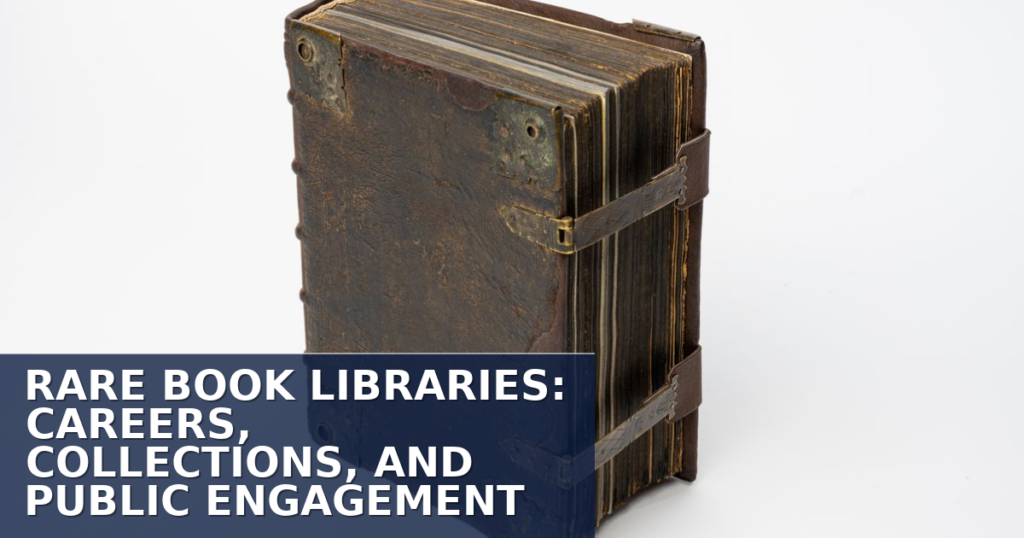
Archives rarely contain loose sheets alone. Ledgers, diaries, and bound volumes require conservators to understand rare book preservation, including book structure, sewing patterns, spine construction, and cover attachment, so repairs respect how the object was built rather than just how it looks. Without this, a well-intentioned mend can weaken a binding further.
Digitization Literacy
Since most collections now get scanned for access copies as part of digital transformation in libraries, conservators need working knowledge of scanning resolution standards, color calibration, and metadata capture, along with safe handling protocols during imaging so fragile items are not stressed under flatbed glass or overhead cameras.
Documentation as a Baseline Expectation
Condition reporting, treatment logs, and before-and-after photography are not optional add-ons. Employers expect thorough documentation as a matter of professional accountability and institutional memory.
What hiring managers actually want is someone who moves between hands-on physical treatment and digital preservation tasks, not someone confined to one lane.
Degree and Certificate Options That Complement an MLIS
Paper conservation careers typically require training beyond a standard MLIS. The table below compares the three major U.S. graduate conservation programs with representative ALA-accredited MLIS programs that offer archives or preservation concentrations. Many professionals pursue both tracks, either sequentially or through coordinated study, to bridge the gap between archival theory and hands-on treatment work.
Institution
Program
Credits
Typical Duration
Key Details
Buffalo State (SUNY)
Dual M.A./M.S. in Conservation of Art and Cultural Heritage and Conservation Science and Imaging
77
3 years
Paper is one of three specializations (alongside objects and paintings). Years 1–2 are campus-based; year 3 is a full-time 12-month internship at a museum, library, or archive. Admits roughly 10 students per year, making it highly competitive.
Winterthur / University of Delaware
Master's in Art Conservation
—
3–4 years
Partnership with the Winterthur Museum. Includes a first-year three-week library and archives block and second-year conservation projects. Duration may extend depending on preparation and specialization path.
NYU Institute of Fine Arts
Dual M.S./M.A. in Conservation of Historic and Artistic Works and History of Art and Archaeology
73
4 years
Three years of coursework followed by a fourth-year internship and thesis. Registration timelines can vary by specialization.
Syracuse University
MLIS with Archival Studies Specialization
36
2 years full-time
ALA-accredited. Includes a conservation and preservation course taught by the university's conservation librarian. Available asynchronously. Field experience typically expected.
Master of Information with Archives and Preservation Concentration
36
2 years full-time
ALA-accredited. Requires three additional zero-credit mandatory courses beyond the 36-credit core.
University of Wisconsin–Milwaukee
MLIS with Archives Concentration
36 (15 in archival studies)
2 years full-time
ALA-accredited, available fully online. Concentration coursework accounts for about 40 percent of the degree.
University of Pittsburgh
MLIS with Archives and Preservation Focus
—
2 years full-time
ALA-accredited. Recognized as a top-ranked archives and preservation program (2021 rankings). Detailed credit breakdowns were not available at publication.
University of Alabama / LSU
MLIS (various archival tracks)
36
2 years full-time
ALA-accredited. Representative of the 36-credit standard shared by many MLIS programs nationwide. Typically four to six courses constitute the archival specialization.
University of Denver
MLIS (archival track)
36–48
2–4 years
ALA-accredited. Credit range reflects elective and practicum flexibility. Part-time students may take up to six years to finish.
Paper Conservation Certification Requirements and Professional Credentials
There is no mandatory state or national license for paper conservators in the United States as of 2026. Instead, professional credibility is built through a combination of AIC standing, graduate-level training, and a documented treatment portfolio. Here is how the credentialing landscape breaks down.
AIC Professional Associate (PA), The Mid-Career Benchmark
The American Institute for Conservation operates a peer-recognition model rather than a licensing system. Professional Associate status is the credential that senior and lead paper conservation positions most frequently require or strongly prefer. Applicants must first hold AIC Professional Membership, which itself requires formal graduate conservation training or equivalent professional-level preparation. The PA application centers on demonstrating Essential Competencies through written responses, sponsorship from two current members, and reference letters from peers familiar with the applicant's work. Earlier descriptions of PA requirements cited roughly two years of conservation training beyond the undergraduate degree and three years of professional experience, though the current process emphasizes competency demonstration rather than rigid year counts. Earning PA signals to hiring committees that your skills and ethics have been vetted by practicing conservators.
AIC Fellow, Honorific for Sustained Contribution
Fellow status is an honor conferred for notable, long-term contributions to the conservation field, it is not a separate license or a higher tier of practice authority. A draft 2021 proposal suggested requiring five years of Professional Membership and twelve years of active engagement in the field before a Fellow nomination, though these thresholds may evolve. Fellows agree in writing to uphold AIC's Code of Ethics and Guidelines for Practice, and the designation is held in perpetuity while the member remains in good standing. For most early- and mid-career conservators, PA is the practical target; Fellow recognition typically comes much later.
AIC Code of Ethics, The Ethical Foundation
All AIC Professional Members, Professional Associates, and Fellows agree to abide by the AIC Code of Ethics and Guidelines for Practice. Many institutions, including federal agencies such as the U.S. Department of the Interior, extend these principles to any conservation treatment performed on their collections, regardless of the practitioner's personal AIC affiliation. Employers take adherence to these standards seriously, so familiarity with the Code is essential even before you apply for any designation.
ANAGPIC, The Graduate Training Network
The Association of North American Graduate Programs in the Conservation of Cultural Property (ANAGPIC) connects accredited conservation training programs rather than credentialing individual conservators. Member programs must offer at least three consecutive years of training, award a recognized diploma, degree, or certificate, and employ faculty with substantial professional recognition, such as AIC Fellow or IIC Fellow status. ANAGPIC also facilitates student research presentations that build early professional visibility. Graduating from an ANAGPIC-member program is one of the clearest signals to employers that your training meets field-wide expectations.
PACIN, Specialty Peer Network for Paper Conservators
The Paper Conservation Information Network (PACIN) operates as a specialty group within the broader AIC community, connecting practitioners who work specifically with paper-based materials. It serves primarily as a peer-networking and technical-resource channel, facilitating conference sessions, publications, and informal mentorship, rather than issuing its own credentials or certifications.
Certificate of Advanced Study, The MLIS-Grad Bridge
If you already hold an MLIS and want to move into hands-on conservation without completing a full conservation MA or MS, a Certificate of Advanced Study (CAS) in preservation or conservation can fill the gap. These post-master's certificates typically focus on material science, treatment techniques, and supervised bench work. While a CAS alone will not qualify you for AIC Professional Associate status, it strengthens your treatment portfolio and positions you to pursue PA eligibility once you accumulate the professional experience and peer endorsements the application requires.
Building Your Treatment Portfolio, The Unofficial Credential
Because the field relies on peer recognition rather than licensure, a well-documented treatment portfolio is arguably the most scrutinized element in any job application or PA review. Detailed before-and-after documentation, treatment reports, and evidence of ethical decision-making carry real weight. Start building this record during graduate assistantships and internships, every smoke-damaged letter cleaned with a vulcanized rubber sponge or fragile binding stabilized is a portfolio entry that future reviewers will evaluate.
Archives Conservation Career Progression: A Case Study From University Archives
A single well-chosen student position can compress years of career development into eighteen months. That is the lesson from Anna Shuff (G'26), who earned her master's in library and information science from Syracuse University's School of Information Studies and used a student archivist assistant role at the University Archives, starting in January 2025, to build the exact competency stack that special collections employers screen for , a case study in MLIS Alumni Career Paths.
From Student Assistant to Lead Processor
Shuff began with routine student-worker tasks and steadily took on more responsibility inside the Special Collections Research Center. By summer 2025, her main project was processing a major addition to the Bishop Truesdell Peck Papers, the personal archive of a Methodist minister who helped found Syracuse University and later served as Dickinson College's tenth president. The new donation, delivered by Peck family descendants, expanded a collection that had previously consisted mostly of diaries into something roughly six to seven times larger, encompassing correspondence, writings, printed material, and ephemera. Highlights included Peck's agreement to donate $25,000 to Syracuse after his death and early drafts of the Board of Trustees bylaws.
The Archival Competencies in Play
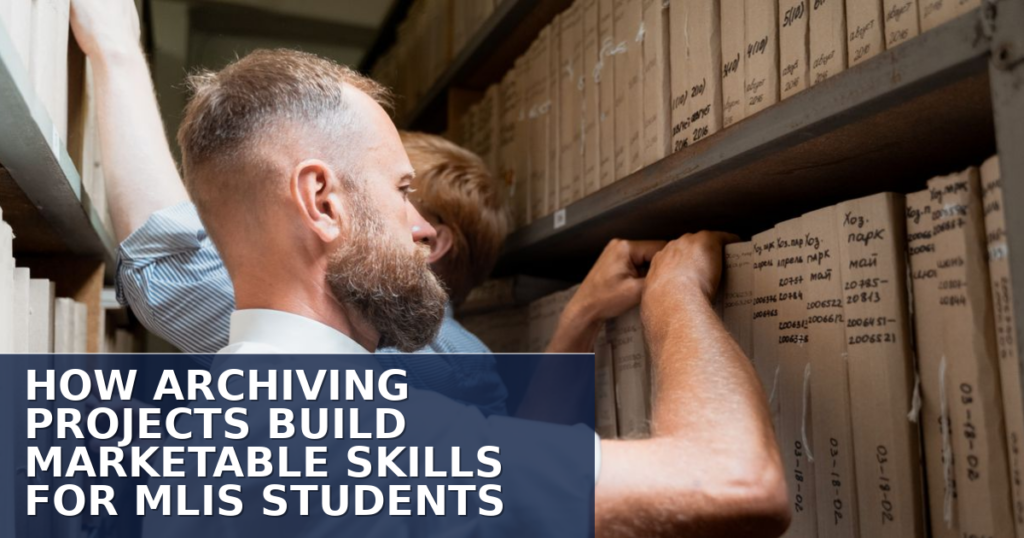
Processing an addition of that scale is not clerical work. Shuff applied the core competencies any hiring manager at an academic archive expects to see on a resume: accessioning incoming materials, arranging and describing the papers into a usable intellectual structure, coordinating with the donor family, and fielding patron research questions against a rapidly changing finding aid. Each of those tasks maps directly to a line item on a special collections job description.
Hands-On Conservation Under a Librarian's Guidance
Some of the Peck papers had survived a fire and arrived with smoke and soot damage. Shuff cleaned a portion using a vulcanized rubber sponge, a standard dry-cleaning tool for surface soot, drawing on a conservation and preservation course taught by David Stokoe, Syracuse's conservation librarian. That is the pattern the field rewards: coursework paired with supervised bench work on real, damaged, high-value material.
Recognition That Translates to Hireability
University Archivist Meg Mason nominated Shuff for a Libraries' Student Employee Award, citing her commitment to the Special Collections Research Center. A named award, a documented processing project of significant scale, and supervised conservation experience form the kind of concrete track record that moves a new MLIS graduate to the top of a candidate pile, a pattern covered in Early Career Tips for Librarians and detailed in iSchool grad gets hands-on experience restoring papers in library archives.
Internships, Fellowships, and Pathways Into Academic and Special Collections
Classroom study versus hands-on lab time: in most library roles, a practicum checks a box, but in paper conservation the experiential component often determines whether you get hired at all. Structured internships, fellowships, and residencies carry outsize weight here because they prove you can handle fragile materials under real-world conditions, not just discuss treatment protocols in a seminar.
Federal Opportunities
The National Archives and Records Administration (NARA) runs a voluntary internship program open to current high school, undergraduate, and graduate students as well as recent graduates.1 Placements last roughly 12 weeks at 10 to 40 hours per week2, cycle through spring, summer, and fall terms1, and require U.S. citizenship, a background check, and a minimum age of 18.1 These internships are unpaid and focus on general archival tasks rather than dedicated conservation-lab work, but they expose you to preservation workflows in a federal setting and look strong on any application.2
The Library of Congress is frequently cited as a conservation destination, yet dedicated paper-conservation fellowships have not been consistently advertised in recent cycles. Monitor the LC jobs page and professional listservs closely for a preservation internship at the LOC; positions surface irregularly.
Smithsonian and Museum-Based Programs
The Smithsonian Conservation Fellowship awards approximately $45,000 per year (with a $5,000 research allowance) to recent master's graduates in conservation or materials science.3 Paper-focused projects are possible when the host lab specializes in works on paper, though the fellowship itself is not paper-specific by title. Deadlines have historically fallen in mid-October.3
The Smithsonian's Welch Program offers one-year advanced training for a single applicant per cycle, with a stipend around $50,000 plus travel and insurance support.4 Specializations have included Asian three-dimensional objects and works on paper. The Museum Conservation Institute also posts internships and fellowships in artifact treatment, though specific paper-conservation slots vary by year.7
The National Gallery of Art's Mellon Advanced Training Fellowship is one of the few placements explicitly dedicated to paper conservation, with recent application deadlines in January.5
University and State-Level Entry Points
Student archivist assistant roles, like the position that gave Syracuse iSchool graduate Anna Shuff direct experience cleaning smoke-damaged documents with a vulcanized rubber sponge, represent one of the lowest-barrier entry points. State archives also post paid library internships; the North Carolina State Archives, for example, has offered a 10-week summer placement at $15 per hour for advanced undergraduates or graduate students in library science, book arts, or conservation.6
How to Strengthen Your Application
Competition is steep, especially for funded fellowships. If you lack formal conservation coursework, emphasize adjacent skills: book arts workshops, digitization experience, volunteer hours in special collections, and any portfolio evidence of careful material handling. A recommendation from a conservation librarian or archivist who has supervised your hands-on work often matters more than an extra line on your transcript.
Salary Expectations by Employer Type and Region
The figures below draw on May 2025 data from the Bureau of Labor Statistics Occupational Employment and Wage Statistics program. Because BLS groups archivists, curators, museum technicians, and conservators into related categories rather than isolating paper conservators on their own, treat these numbers as approximate benchmarks rather than precise targets for a single specialty. The broader "Archivists, Curators, and Museum Technicians" category employed roughly 32,430 workers nationally, while the archivist-specific slice covered about 7,970. BLS projects 4 percent job growth for the combined group from 2025 to 2035, roughly in line with the average for all occupations, with an estimated 4,300 annual openings driven largely by replacement needs. Keep in mind that BLS does not publish a career ladder breaking out entry-level versus senior conservator pay. In practice, professionals who enter as archives technicians or junior conservators at salaries near the 25th percentile can expect meaningful gains as they earn certifications, complete post-graduate fellowships, and move into supervisory or head conservator roles. Federal and large academic employers tend to pay toward the upper quartile, while smaller museums and nonprofits often land closer to the median or below. Geographic cost of living, union coverage at public institutions, and the scarcity of trained conservators in certain regions also push compensation up or down.
BLS Occupation
National Employment (2025)
25th Percentile Salary
Median Salary
75th Percentile Salary
Mean Salary
Archivists
7,970
$50,680
$64,550
$83,020
$70,640
Archivists, Curators, and Museum Technicians
32,430
$46,490
$60,330
$78,450
$65,960
Librarians, Curators, and Archivists (broad group)
234,910
$45,480
$60,470
$78,000
$63,900
Librarians and Media Collections Specialists
133,790
$56,310
$68,270
$84,480
$72,840
Hands-on treatment experience plus targeted credentials matter more than any single degree: hiring managers look first for evidence you can clean soot-damaged papers, stabilize bindings, and document a conservation decision.
mastersinlibraryscience.org
Landing a paper conservation role is a multi-year project, not a single application. The path combines graduate training, whether a Masters in Library Science with an archives or preservation concentration, a conservation MA, or both, with verified hands-on treatment practice and AIC-aligned professional credentials that signal you can work independently.
The most effective next step is to secure an internship or student archivist position now. As the Syracuse case study showed, applied experience, even starting with single-folder collections, is what separates candidates who get interviews from those who do not. Use the certification requirements and internship listings already covered to choose one concrete opportunity and pursue it this semester.