How to Plan and Launch STEM Programs in Your Library

A step-by-step framework for MLIS students and librarians to design, fund, and evaluate impactful STEM programming for all ages.

By Meredith SimmonsReviewed by MLIS Academic Advisory TeamUpdated July 10, 202625+ min read
STEM Programming in Libraries: A Practical Guide for MLIS Students

What you’ll learn in this article…

  • Grants like Spark of Science @ My Library fund full STEM series at no local cost.
  • Most libraries launch STEM programs with fewer than three staff members.
  • STEM skills give librarians a competitive edge in a 2% growth job market.

Public libraries that only circulate books versus those that run hands-on science workshops serve fundamentally different roles in their communities. The shift toward the latter is accelerating: libraries nationwide now compete for grants, build makerspaces, and partner with organizations like the STAR Library Network to deliver STEM programming that schools and museums cannot replicate at the same scale.

Hastings Public Library in Nebraska illustrates what this looks like in practice. Children's Librarian Alyssa Langholz secured a Spark of Science @ My Library grant in 2026, bringing NASA activity kits and community science events to a small city through the Science Across America initiative.1 Her work shows that STEM programming success depends less on institutional size than on deliberate planning, partnership cultivation, and knowing how to write a competitive grant.

For MLIS students, the practical question is not whether libraries should offer STEM programming but how to build the skills that make it possible. Those interested in specializing in this area can explore online science librarianship degrees as one focused path forward.

What Is STEM Programming in Libraries and Why Does It Matter?

STEM programming in libraries refers to structured, hands-on learning experiences that introduce community members to science, technology, engineering, and math concepts outside formal classrooms. These programs can take many forms: coding clubs where teens build apps, makerspaces stocked with 3D printers and robotics kits, family science nights, or take-home experiment kits. The library becomes a free, accessible entry point for science literacy, meeting patrons where they are.

A Model in Practice: Hastings Public Library

A powerful illustration comes from Hastings Public Library in Nebraska. In 2026, Children's Librarian Alyssa Langholz secured a grant through Spark of Science @ My Library, a partnership between the STAR Library Network and HHMI Tangled Bank Studios.1 This placed Hastings among a select group of libraries nationwide hosting Science Across America events, tied to the nation's 250th anniversary celebration of scientific discovery.

The Hastings programming arc models an effective sequence from hands-on activity to community dialogue. The first event, Operation: Community Science, taught participants how everyday observations contribute to real scientific research. Next, on August 15, 2026, Space Rock Sherlock will use a NASA activity kit to explore geology and astronomy. Finally, Let's Talk Science: A Community Dialogue, scheduled for October 2026, creates space for conversations about science's role in daily life. Langholz captures the philosophy behind all three: "Science is all about asking questions, exploring ideas, and making discoveries."1 That sentiment serves as a mission statement for any library STEM initiative, emphasizing curiosity over correctness.

Why STEM in Libraries Matters for MLIS Students

For current MLIS students, the Hastings example highlights skills that go far beyond storytime. Children's librarians are writing grants, building partnerships with national organizations, and designing curricular sequences that align with community needs. These aren't one-off crafts; they're integrated learning experiences that address gaps in formal STEM education, particularly for underserved populations. Research consistently shows that libraries serve as equity bridges, offering resources and mentorship to youth who may lack school lab access or tech role models, a dynamic explored further in information services to diverse populations. Grant-funded programs like Science Across America demonstrate how proactive librarians can secure external funding and turn a small-town library into a hub of national scientific engagement. For anyone entering the field, developing program design, grant writing, and community partnership skills should be a priority, and STEM programming provides a perfect, high-impact arena to build them. Those interested in specializing further may also want to explore what a science librarian does and available online degrees in that focus area.

Types of STEM Programs by Age Group and Format

Library STEM programming has expanded beyond the single-format workshop model, with institutions now offering virtual, hybrid, and take-home options that reach patrons who cannot attend in-person sessions. Understanding how to match program formats to specific age groups helps MLIS students in youth services design inclusive offerings that serve diverse community needs.

Programs for Children

Younger learners benefit from structured, hands-on activities that balance exploration with guided instruction. Charlotte Mecklenburg Library's STEAM 101 program, launched in 2024, delivers virtual STEAM content designed specifically for children, allowing families to participate from home.1 This format works well for busy households and extends programming reach beyond the physical branch.

For in-person settings, science fairs, nature exploration stations, and simple robotics activities remain popular. Take-home kits provide another avenue: Pennsylvania's STEMlab Lending Library uses a borrow-and-deliver model that lets families check out complete experiment kits, bringing hands-on science learning directly into homes without requiring attendance at a scheduled event.2

Programs for Teens

Teens often prefer project-based formats with more autonomy and social engagement. Charlotte Mecklenburg Library offers Teen Online Programs covering STEM and STEAM topics in virtual environments, meeting teens where they already spend time.1 Their Digital Escape Rooms apply STEM-adjacent problem-solving skills in a game-based format, demonstrating how libraries can attract teen participants through creative approaches.

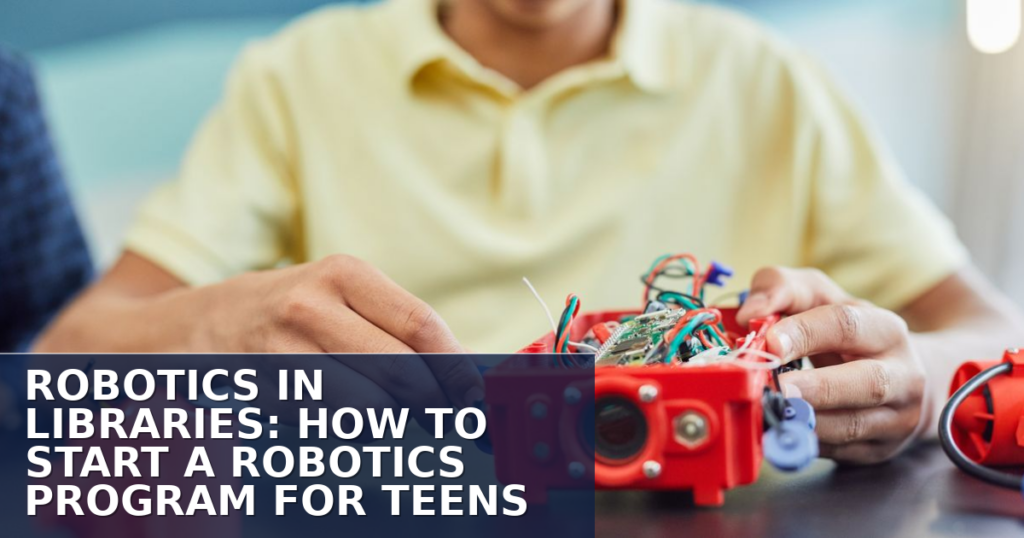
Coding clubs, maker challenges, and engineering competitions work well for this age group in person. Virtual coding clubs allow teens to collaborate remotely, while hybrid options let participants choose their preferred mode of engagement.

Programs for Families and General Audiences

Family-oriented programming encourages intergenerational learning. Teaching Together STEM, a museum-based initiative active in 2024, combines virtual sessions, in-person workshops, and take-home kits in a single hybrid model.3 This approach lets families engage at their own pace and in their preferred setting.

Pennsylvania STEMlab also offers virtual programs for general audiences alongside its lending library, providing statewide access to STEM content regardless of geographic location.2

Format Considerations for Program Planning

When designing STEM programming, consider these format options:

  • In-person workshops: Best for hands-on activities requiring specialized equipment or direct supervision
  • Virtual programs: Expand geographic reach and accommodate scheduling constraints
  • Take-home kits: Serve patrons who cannot attend scheduled sessions; work well in rural areas
  • Hybrid models: Offer flexibility by combining multiple formats within a single program series

Matching format to audience needs improves participation rates and ensures equitable access to STEM learning opportunities across your community.

Questions to Ask Yourself

Which age groups at your library or practicum site are currently receiving little to no dedicated programming?
Gaps in service, whether teens, toddlers, or adults, often signal the strongest opportunity for a new STEM initiative, since unserved audiences tend to generate quick community support and grant eligibility.
Does your community respond better to drop-in STEM activities or structured multi-week series?
Drop-in formats lower the barrier to attendance but limit skill-building continuity; a multi-week series builds deeper learning but requires consistent commitment from families and staff scheduling.
Could a take-home kit model extend your reach to families who cannot visit during standard program hours?
Take-home kits let working parents and caregivers participate on their own schedule, broadening impact without requiring additional physical space or evening staffing.

How to Start a STEM Program in Your Library: A Step-By-Step Framework

Launching a STEM program does not require a massive budget or years of planning, but it does require a deliberate sequence of decisions. A realistic timeline from initial concept to your first event is three to six months for a small program. Start with a single pilot event before committing to a recurring series, so you can gather feedback and refine your approach before scaling up.

Five-step timeline for launching a library STEM program, from needs assessment through pilot launch, spanning roughly three to six months

How to Start a STEM Program in Your Library: Detailed Planning Guide

A 2025 Public Library Association survey found that 68% of libraries offering STEM programming launched their first initiative with fewer than three staff members and no dedicated budget line. This reality shapes every planning decision: successful library STEM programs begin not with aspirational visions of laser cutters and robotics labs, but with systematic assessment of community needs and honest inventory of institutional capacity.

Conduct a Needs Assessment Before Designing Anything

Before selecting activities or writing a single grant application, survey your community to identify gaps rather than duplicate existing efforts. Distribute patron surveys at circulation desks and through email lists, asking families what STEM topics interest them and what barriers (cost, transportation, schedule) prevent participation in existing programs. Request anonymized data from your local school district on STEM achievement gaps by grade level and demographic group; these reports often reveal which student populations lack access to hands-on science and technology enrichment. Map what nearby organizations already provide. If the children's museum runs weekend engineering workshops and the community college hosts a summer coding camp, your library can complement those offerings by focusing on evening programs for working families or take-home kits for rural patrons who cannot travel to centralized venues. This environmental scan prevents redundancy and positions your library as a connector within a broader STEM ecosystem.

Match Program Format to Your Staffing Reality

Design constraints are not failures; they are planning parameters. A solo children's librarian can sustain a monthly science storytime that integrates picture books about space exploration with simple experiments using household materials, or assemble take-home STEM kits that families check out like books. A library with a teen services team and access to community volunteers can support a weekly coding club using free platforms like Scratch or Code.org, or maintain a makerspace corner with circulating tools and scheduled open-build hours. Staffing honesty also means acknowledging that most libraries cannot hire a dedicated STEM coordinator. Instead, recruit guest facilitators from local colleges, tech employers, and engineering firms. A computer science professor may lead a single workshop on algorithms; a retired chemist may volunteer monthly for hands-on lab demonstrations. These partnerships extend your capacity without adding permanent payroll costs. Library associations for MLIS students can also connect you with peer networks where librarians share facilitator contacts and program templates at no cost.

Follow a Three-Month Pilot Sprint

A compressed timeline forces prioritization and generates early feedback. Month one is for planning and partner outreach: finalize your program concept, identify one external collaborator (a school STEM teacher, a museum educator, a seed library director), and draft a simple budget. Month two covers materials acquisition and promotion: order supplies, create print and digital marketing assets, and schedule the event date. Month three is execution with built-in evaluation: run your first program, distribute feedback forms to participants and caregivers, and schedule a debrief meeting within one week to capture what worked and what requires adjustment before the next cycle. This sprint model produces actionable data faster than multi-year strategic plans, and it allows you to iterate or pivot before investing significant resources in a format that may not resonate with your specific community.

Funding, Grants, and Budget-Friendly STEM Ideas

Library STEM programming can launch on almost any budget, from zero-dollar volunteer-powered experiments to institute-funded makerspaces, but the most successful initiatives start with a clear funding strategy that blends grants, community partnerships, and clever resourcefulness.

Grant Opportunities That Fund Library STEM

Nationally, programs like Spark of Science @ My Library, a partnership between the STAR Library Network and HHMI Tangled Bank Studios, provide direct support for hands-on science activities. In 2026, children's librarian Alyssa Langholz at Hastings Public Library used this grant to run events like Operation: Community Science and Space Rock Sherlock, which included free NASA activity kits.1 Application cycles open periodically, so watch the STAR_Net website for announcements.

The IMLS National Leadership Grants for Libraries offer awards ranging from $25,000 to $1,000,000, with no cost share required.2 For the FY2026 cycle, approximately 45 awards totaling $11.5 million were available, with applications due March 13, 2026.3 These grants fund replicable practices, models, or tools that advance library services, making STEM programming a natural fit. Additionally, many state library agencies offer targeted grants. Maryland's state library, for instance, set a May 4, 2026 deadline for its STEM funding cycle,4 signaling that state-level opportunities are abundant and often aligned with local educational priorities.

Budget Tiers for STEM Programming

  • $0 tier: Recruit community scientist volunteers to lead demonstrations, request free NASA activity kits through programs like Science Across America, and use open-source coding platforms such as Scratch. Many public libraries already have computer labs that can host Hour of Code sessions at no extra cost.
  • Under $500 tier: Invest in consumable science supplies (microscopes, slides, safety goggles), Raspberry Pi kits for coding clubs, or Snap Circuits for electronics exploration. These materials offer high engagement for a modest outlay and are often reusable across multiple sessions.
  • $2,000+ tier: Fund dedicated makerspace furniture, 3D printers, robotics kits like LEGO Mindstorms or VEX, and specialized software. Larger grants or multi-year budget allocations typically support these purchases, which can transform a library into a community innovation hub.

Four Activities You Can Run Tomorrow

  • Kitchen Chemistry: Use pantry items like vinegar, baking soda, food coloring, and cornstarch to create fizzing reactions or homemade lava lamps. All ages enjoy the visual spectacle, and cleanup is minimal.
  • Nature Journaling Walks: Hand out notebooks and pencils, then lead a walk around the library grounds or a nearby park. Participants observe plants, insects, and weather patterns, honing scientific observation skills without any technology overhead.
  • Hour of Code Sessions: Utilize the library's existing computers to run free coding tutorials from Code.org. These self-guided modules engage kids and teens in foundational programming logic, often sparking interest in future tech programs.
  • Seed Lending Libraries: Purchase seed packets from a dollar store and create a simple lending station. Patrons "check out" seeds, grow plants at home, and return harvested seeds. Pair this with a simple biology display to explain germination, photosynthesis, and biodiversity. For a deeper look at structuring this kind of program, starting a seed library involves policy and cataloging steps worth reviewing.

Partnerships That Multiply Resources

Friends of the Library groups frequently allocate funds for new initiatives, and they can be powerful allies in underwriting consumable supplies or seed money for larger grants. Local businesses, particularly tech firms, may donate equipment such as 3D printers, robotics kits, or circuit components. In-kind donations of professional time, such as a software engineer volunteering to lead coding clubs, stretch budgets dramatically. Co-sponsorship with schools, museums, and universities can also bring shared resources and expertise, turning a small library program into a community-wide STEM celebration.

Building Partnerships With Schools, Museums, and STEM Organizations

How do libraries actually build STEM partnerships that last beyond a single event?

The answer starts with recognizing what libraries already bring to the table: free, neutral space, deep community trust, and an established relationship with families across income levels. Partners bring what libraries often lack, including subject expertise, specialized materials, and funding connections. The Hastings Public Library model illustrates this clearly. Children's Librarian Alyssa Langholz secured a grant through the Spark of Science @ My Library initiative, a partnership between the STAR Library Network and HHMI Tangled Bank Studios, which unlocked NASA activity kits and a structured programming framework that no single rural library could have assembled independently. The result is a multi-event series connected to national scientific communities and a broader celebration of American scientific history.

That kind of leverage is replicable, but it requires a deliberate approach to identifying and cultivating partners.

Start With a Short List, Then Pitch a Pilot

Begin by identifying three to five organizations in your community whose missions overlap with informal science education. School districts, community colleges, local science museums, nature centers, and regional tech companies are all strong candidates. Rather than proposing a full-year collaboration upfront, pitch a single co-hosted event. A low-stakes pilot lets both parties test compatibility, share the logistical load, and demonstrate value to their respective leadership. If the pilot works, formalize the relationship with a memorandum of understanding that spells out roles, resource contributions, and communication expectations. That document protects both parties and makes future grant applications easier, since many funders want to see documented community partnerships.1

Aligning With Schools Through NGSS

School partnerships deserve particular attention. When library STEM programs are aligned with Next Generation Science Standards, teachers view the library as an extension of classroom learning rather than a competing activity. This framing matters for scheduling, referrals, and buy-in from principals. After-school and summer programs are especially valuable because they fill gaps that school budgets increasingly cannot cover. Frame your pitch to educators around specific standards your program addresses and the populations it serves.

Reaching Underserved Communities Through Inclusive Partnerships

Equity-focused partnerships expand both reach and program quality. Connecting with disability advocacy organizations helps libraries apply universal design principles to STEM activities, ensuring that hands-on programs are accessible regardless of ability. Partnering with multilingual community groups and Title I schools brings in populations that informal science education has historically underserved. information services to diverse populations is a topic covered extensively in MLIS coursework, and the same frameworks apply here: the Pennsylvania Library Association's promising practices for youth services specifically recommend using materials and themes that provide rich representation across races, ethnicities, and family structures.2 Research from the Education Development Center reinforces that libraries are particularly well-positioned to serve diverse and underserved families precisely because access is free and the environment carries no academic pressure.3

Community dialogue is another practical tool.4 Hosting a conversation with community members before designing a program surfaces local priorities and cultural contexts that outside organizations might miss entirely. This step also builds the kind of grassroots investment that sustains programming when grant funding eventually cycles out.

Integrating STEM Programming Into MLIS Coursework and Practicums

The central tradeoff for MLIS students interested in STEM programming is whether to pursue a generalist degree with broad applicability or to specialize early through electives, certificates, and targeted practicums that may narrow your options but deepen your expertise. Both paths can lead to rewarding careers, but understanding how to identify and access STEM-focused educational opportunities will help you make a decision that aligns with your professional goals.

Finding STEM-Related Coursework in Accredited Programs

Start your search by visiting the American Library Association's website, which maintains a comprehensive list of ALA accredited MLIS programs. You can filter by specializations such as youth services, school librarianship, or digital curation, then browse each program's electives or certificate options for STEM-related offerings. Many programs now include coursework in areas like makerspace management, digital literacy instruction, or technology-enhanced programming for youth, though course titles and availability vary considerably.

Explore university program pages directly by searching for terms like "makerspace management," "STEM librarianship," "youth STEM services," or "practicum in libraries." Some programs offer dedicated certificates or concentration tracks that combine coursework in youth development, technology integration, and hands-on programming skills. Others may not have formal STEM tracks but allow students to assemble relevant electives into a coherent focus area.

Aligning Your Education With Career Market Demands

Before committing to specific courses or programs, check the Bureau of Labor Statistics at BLS.gov for the librarian occupational outlook and the skills employers are seeking. Then review job postings on library association job boards, such as ALA JobLIST, to identify the qualifications and competencies that appear most frequently in positions involving STEM programming, online MLIS youth services, or makerspace coordination. This research helps you tailor your coursework selections to match real hiring needs rather than assumptions about what employers want.

Pay attention to whether job postings mention specific technical skills, grant writing experience, or community partnership development. These details can guide which electives or practicum placements will best prepare you for competitive positions.

Leveraging Professional Associations for Guidance

Professional associations offer valuable resources for students seeking STEM-focused library education. Contact organizations such as the American Association of School Librarians, the Association for Library Service to Children, or the Young Adult Library Services Association for guidance. These groups often maintain lists of recommended programs, continuing education opportunities, and professional development workshops focused on STEM programming competencies.

Association memberships frequently include access to webinars, conference sessions, and mentorship programs where you can connect with practicing librarians who have built successful STEM programs. These connections can also help you identify practicum sites with strong STEM programming and supervisors who can provide meaningful hands-on training.

Measuring Success: Evaluation Tools and Outcome Benchmarks

Evaluation means collecting evidence that your library's STEM programming is actually changing how participants think, explore, and engage with science. Without a clear framework and consistent data, even the most creative coding club or makerspace risks looking like a nice extra rather than a core service. The good news is that practical, low-cost evaluation tools already exist, and learning to use them is a skill MLIS students can develop well before graduation.

A Framework Worth Knowing: The NRC Science Learning Strands

The National Research Council identifies six strands of informal science learning that translate directly into observable library program outcomes:

  • Excitement and motivation: Are participants voluntarily returning? Do they talk about the program outside the library?
  • Understanding science content: Can a child explain, in their own words, what they explored during a session?
  • Engaging in scientific reasoning: Are participants asking "what if" questions, forming predictions, or testing ideas?
  • Reflecting on science: Do attendees connect the activity to their daily lives or to news they have encountered?
  • Productive scientific practices: Are they measuring, recording data, building prototypes, or debugging code?
  • Identifying with the scientific enterprise: Do participants begin to see themselves as people who "do" science?

Mapping each strand to a specific behavior you can watch for during a program turns an abstract framework into a practical checklist.

Practical Measurement Tools

You do not need expensive software to gather meaningful data. Four tools cover most situations:

  • Pre/post participant surveys: A short form (three to five questions) given before the first session and after the last captures shifts in confidence, interest, and self-reported knowledge.
  • Observation protocols: During programs, a staff member or volunteer records what participants are doing: asking questions, collaborating with peers, experimenting independently, or simply watching. Tally marks on a simple grid work well.
  • Attendance and repeat-visit tracking: Library circulation systems or sign-in sheets reveal whether the same patrons return, which speaks directly to the excitement and motivation strand.
  • Qualitative parent and caregiver feedback: Brief exit interviews or a comment card can surface stories that numbers alone miss, such as a child who started reading science books at home after attending a program.

Sample Metrics by Program Type

Different formats call for different yardsticks:

  • For coding clubs, track project completion rates and skill progression across sessions. If a participant moves from block-based coding to writing simple text-based scripts over a semester, that is measurable growth.
  • For makerspaces, monitor unique users per month and the diversity of project types. A space that only attracts the same ten patrons building the same kind of project may need outreach adjustments.
  • For science storytimes and discovery programs, watch attendance trends over multiple sessions and note the age range of participants. Broadening reach across age groups signals growing community relevance.

Reporting Results to Stakeholders

Library boards and grant funders do not usually speak in learning strands. Translate your findings into language they care about:

  • Community reach numbers (total participants, unique households served, geographic spread)
  • Demographic diversity data showing the program serves underrepresented groups
  • Patron testimonials that illustrate impact in human terms
  • Alignment with your library's strategic plan goals, whether those center on literacy, digital equity, or community engagement

When Hastings Public Library in Nebraska secured a 2026 Spark of Science @ My Library grant, a partnership between the STAR Library Network and HHMI Tangled Bank Studios, Children's Librarian Alyssa Langholz built programming around hands-on science events like Operation: Community Science and an upcoming Space Rock Sherlock session using a NASA activity kit.1 Programs backed by national partnerships like these often come with built-in evaluation templates, giving newer librarians a head start on data collection and reporting. Early career librarian advice on grant writing and program assessment can help MLIS graduates navigate these reporting expectations with confidence.

Presenting a concise one-page summary that pairs a few strong numbers with one or two compelling quotes is far more effective than a lengthy report. Stakeholders want to see that the investment produced measurable community benefit, and a well-structured evaluation gives you the proof.

Salary Snapshot for Librarians in Stem-Focused Roles

Librarians who develop deep STEM programming expertise can pursue several career paths, each with different earning potential. The figures below reflect approximate 2024 national medians from the Bureau of Labor Statistics for the broader occupational categories, not specifically STEM-focused positions. Librarians who move into postsecondary teaching roles, such as library science faculty, may see higher earning ceilings as they build specialized STEM knowledge.

Median annual salaries in 2024: $64,320 for librarians and media collections specialists, $57,100 for the broader librarians category, and $78,630 for library science teachers at the postsecondary level

Career Outlook for Librarians With STEM Programming Skills

The Bureau of Labor Statistics projects 2% job growth for librarians and media collections specialists over the 2024 to 2034 decade, which is slower than average. However, librarians who bring STEM programming skills to the table can distinguish themselves in a competitive market. The table below highlights median salaries for this occupation across the highest paying states, based on the most recent federal wage data. Librarians in states with strong public library systems and robust STEM funding tend to earn well above the national median.

StateTotal Employed25th Percentile SalaryMedian Annual Salary75th Percentile SalaryMean Annual Salary
Washington2,830$70,240$94,400$108,380$91,280
District of Columbia940$76,770$93,740$107,040$94,300
California10,030$66,560$86,590$105,520$90,960
Maryland3,270$64,440$81,690$101,620$85,520
Nevada650$63,970$79,710$82,700$76,480
New Jersey3,510$62,820$79,380$99,210$81,250
Delaware330$63,310$78,300$92,780$77,850
Alaska330$62,600$78,280$94,710$77,090
New York11,020$61,360$77,080$96,970$82,150
Connecticut2,430$61,340$76,380$96,160$79,080
Massachusetts5,120$60,470$75,790$94,630$76,600
Oregon1,650$58,270$75,360$89,090$73,900
Minnesota2,290$60,720$75,260$84,390$73,480
Virginia4,750$59,710$74,320$83,370$73,340
Georgia3,450$56,530$73,500$80,990$70,900

Common Questions About Library STEM Programming

Whether you are an MLIS student exploring career options or a working librarian considering your first science or technology program, these frequently asked questions cover the practical essentials. Each answer is drawn from current grant opportunities, real library initiatives, and best practices in the field as of 2026.

What is STEM programming in libraries?
STEM programming refers to structured activities that teach science, technology, engineering, and math concepts in a library setting. Examples include coding clubs, hands-on science experiments, robotics workshops, and makerspace projects. These programs promote critical thinking and information literacy while serving patrons of all ages. Public libraries are uniquely positioned to offer free, community-centered STEM learning that complements school curricula.
How do you start a STEM program in a library with no existing makerspace?
You do not need a dedicated makerspace to begin. Start with low-cost, portable activities such as paper circuit workshops, nature observation walks, or coding exercises on existing library computers. Identify a champion on staff, set a recurring schedule (even monthly), and build from there. Many successful programs launched with nothing more than a folding table, a box of craft supplies, and a clear learning objective.
What grants are available for library STEM programs in 2026?
Several national programs fund library STEM initiatives. One notable example is the Spark of Science @ My Library program, a partnership between the STAR Library Network and HHMI Tangled Bank Studios, which provided grants to select libraries across the United States in 2026. The Hastings Public Library in Nebraska secured one of these awards. Other sources include IMLS National Leadership Grants, state library agency funding, and local STEM education foundations.
How can MLIS students prepare for STEM programming roles before graduating?
Choose electives or certificate tracks in youth services, instructional design, or community engagement. Seek practicum placements at libraries with active STEM programs so you gain hands-on facilitation experience. Volunteer with science museums or after-school STEM clubs to build a portfolio. Familiarize yourself with grant writing, because securing funding (as Hastings Public Library's Alyssa Langholz demonstrated) is a core competency for these roles.
How do libraries measure the success of STEM programs?
Common evaluation tools include pre- and post-program surveys, attendance tracking, repeat participation rates, and qualitative feedback from families. Some libraries also track skill gains through simple rubrics or portfolio assessments. National frameworks like the STAR Library Network's evaluation resources offer templates. The key is setting clear objectives before you launch, then collecting data consistently so you can report outcomes to funders and stakeholders.
What are examples of budget-friendly STEM activities any library can run?
Community science projects (teaching patrons how everyday observations contribute to research), seed lending libraries paired with botany lessons, and coding unplugged activities that require only paper and pencils are all low-cost options. NASA provides free activity kits for programs like Space Rock Sherlock, which the Hastings Public Library is using in its Science Across America series. Free online platforms for coding clubs, such as Scratch, also keep expenses minimal.

Turn the outline into action by taking three steps now.

  • Identify a practicum site that already runs STEM programming, such as a library hosting a makerspace or coding club.
  • Draft a mock grant proposal using the Spark of Science @ My Library initiative or an IMLS grant as a template, just as Hastings Public Library did for its Science Across America series.
  • Run one low-budget activity, like a paper rocket build or a community science observation, at your current volunteer site to prove you don't need a full lab to engage patrons.

STEM programming skills make MLIS graduates more competitive and more impactful. Exploring MLIS alumni career paths can show you the range of roles where these skills are already making a difference. This is where library science is headed.

Recent News

Recent Articles