Preservation Vs. Conservation: A Curriculum Comparison
These two tracks tackle the same core mission, keeping cultural materials accessible over time, but they differ sharply in what you study, the tools you learn, and where you end up working.
Digital Preservation Track
Digital preservation focuses on the long-term stewardship of born-digital and digitized content. Coursework typically covers metadata standards for preservation, media refreshment, emulation, migration strategies, and electronic records repository design. At Simmons University the catalog lists LIS 444 Digital Preservation1, while San José State University offers several seminars in its digital curation MLIS programs, including courses on digital curation tools and methodologies plus Enterprise Content Management and Digital Preservation. The University of Texas at Austin's iSchool covers permanent archiving of digital information, repository construction, and administration.3
Skills you develop lean toward systems thinking: XML and metadata schemas, checksum verification, file-format analysis, and policy writing for digital archives. Graduates often move into roles such as digital preservation specialist, digital archivist, or electronic records manager at libraries, government agencies, and media organizations.
Physical Conservation Track
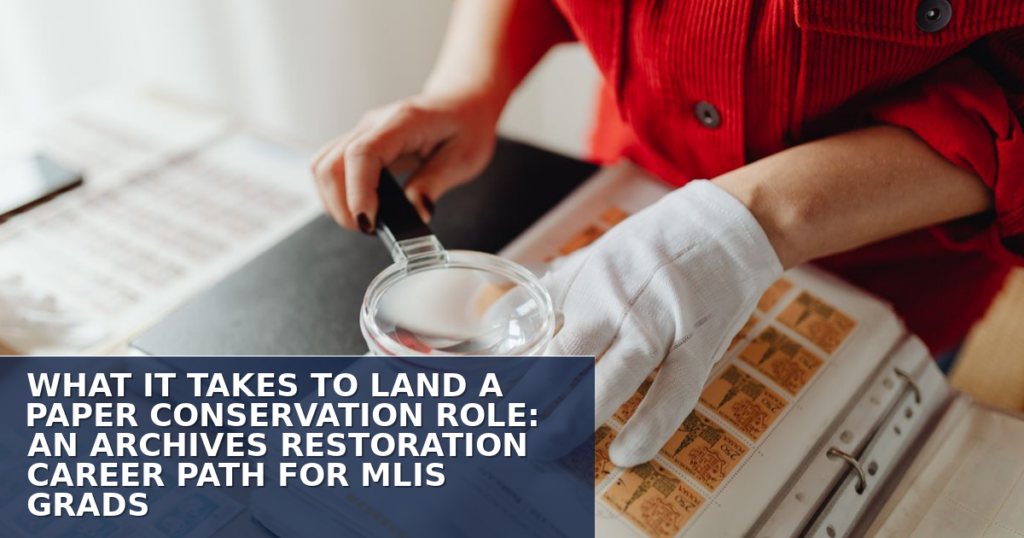
Physical conservation centers on the hands-on care of tangible materials: paper, textiles, photographic prints, and bound volumes. A representative course is Simmons's LIS 439 Preservation Management2, which addresses disaster planning and response, environmental monitoring, and preventive care strategies. San José State lists INFO 259, Preservation Management, covering similar ground. Beyond management-level courses, deeper conservation training typically adds materials science, bookbinding degree studies, and paper repair.
The critical distinction for online learners: physical conservation almost always requires in-person lab components. Techniques like leaf-casting, deacidification, and binding repair demand supervised practice with specialized equipment, making a fully online format impractical for this concentration. Some programs offer hybrid arrangements with short residencies, but prospective students should expect at least partial on-campus time.
Which Track Fits an Online Format?
Digital preservation is far more feasible in a fully online digital libraries degree program. Its coursework translates naturally to virtual labs, cloud-based repository platforms, and asynchronous collaboration. Physical conservation, by contrast, remains anchored to the bench. If completing your degree entirely online is a priority, the digital preservation track is the more realistic path. Students drawn to physical conservation should look for hybrid programs or plan for residency-based intensives that supplement online coursework.